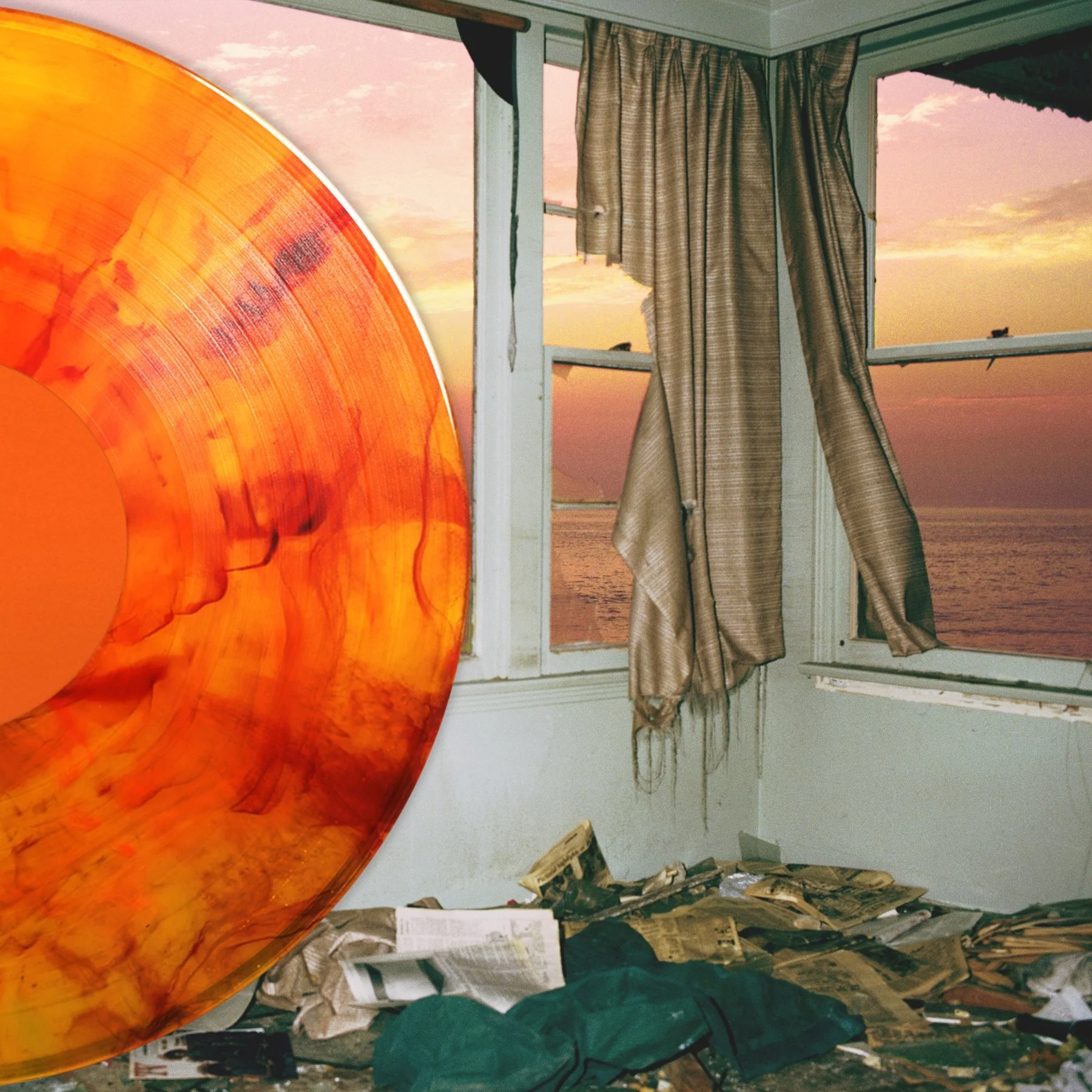
Allah-Las - Zuma 85 (Levitation Edition)
In Stock and Shipping Now!
Are you tired of that same old song? Tune into any alt-rock robo-jock frequency on the FM dial and you’ll know what I mean. Somewhere along the way, nostalgia curdled, and it feels like we’re doomed to hear the same boring souls for eternity. But don’t ask California sons Allah-Las—they wouldn’t know a thing about it. “The Stuff,” which opens the band’s fifth LP, Zuma 85, lays it out:
“I don’t listen to the radio/They keep playing that song again/And the deejay’s a computer.”
As the glammy, electronic strut of the song indicates, Zuma 85 signals the start of a new era for Allah-Las, and finds the band reinventing itself in defiance of the algorithmic categorization and robotic sterility. Recorded in the midst of the shift from the Old World to whatever branch of reality we’re on now, it’s a return, too: The album will be released October 13th on their own label, Calico Discos, in partnership with Innovative Leisure, which released early defining statements like Allah-Las (2012) and Worship The Sun (2014).
For the last 15 years, Allah-Las have alchemically melded surf rock washes with folk rock jangle and rock, building up their lauded music podcast, Reverberation Radio, and record label, Calico Discos, in the process. But a lot has changed since Matthew Correia (drums/vocals), Spencer Dunham (bass, guitar, vocals), Miles Michaud (guitar, organ, vocals), and Pedrum Siadatian (guitar, synth, vocals) first bonded over psych rock vinyl in the back room at Amoeba Records in the late aughts. Zuma 85 finds the quartet facing a new world with a wealth of new sounds, drawing from an eclectic mix of progressive rock, prog, kosmische, and Eno-esque art rock, scuzzy Royal Trux riffs, and detouring into tones and textures that call to mind ‘90s and 2000s pop.
The album was born, like so much else these days, out of the downtime of 2020-2022. For most of the band’s existence, Allah-Las adhered to a year to album year/tour year schedule, logging serious hours on the road. When the shutdown of 2020 put everything on hold, it opened up space for each member to focus on their own lives and interests, and time to re-envision what creative processes could look like.
When it came time to reconvene, that sense of looseness proved pivotal. Instead of bringing finished songs to the studio, they entered the picturesque Panoramic House recording in Stinson Beach (a space co-owned by John Baccigaluppi of Tape Op magazine) with sketches, ideas, and riffs. Working with co-producer Jeremy Harris (White Fence, Devendra Banhart, Sam Gendel) they shaped and crafted the new songs in real time over three sessions, which were then mixed in Los Angeles by frequent collaborator Jarvis Taveniere (Woods, Avalanches, Purple Mountains).
It was clear from the get go the bucolic environment—observed through picture windows overlooking Stinson Beach and Bolinas Bay—would be conducive to creating the first statement from Allah-Las 2.0. “We got in real late that first night of the first session,” Michaud says. “It was around midnight. We had a quick intro and Jeremy had a bottle of wine. We had a little and he said, ‘You wanna start recording?’”
They did. And when the group reassembled the following morning to listen back, they found the sparkling and stutter--stepped “Right On Time” mostly done. It was unlike anything the band had ever recorded but felt entirely natural. “Everything just worked,” Michaud says. “That studio just pulls it out of you.”
Despite the habitat where Zuma 85 was crafted, these songs represent the Allah-Las departing familiar beachy territory for off the map expanses, embracing the influence of late-era Lou Reed and John Cale, the ‘70s mutant pop of Peter Ivers and early Eno and Roxy Music, and textures borrowed from Japanese pop and loner-folk obscurities, There are kosmische zones, like the Popol Vuh-evoking “Hadal Zone,” anthemic and electronic boogies like “The Stuff” and “Sky Club,” and arch prog on tunes like “GB BB” and “Smog Cutter.” On the instrumental title track, “Zuma 85,” field recordings and chimes precede Manuel Göttsching (Ash Ra)-style guitars, which drift aquatically over a motorik rhythm and hazy synths.
Sharing a name with that song is a photo of an abandoned house by California photographer John Divola. Selected by Correia, the band’s resident photography head and album art designer, it juxtaposes a visage of man-made chaos against the natural beauty of the West Coast. It served as an unspoken reference point for the album, a symbolic totem indicative of a new era. A decade and a half into their run as Allah-Las, Correia, Dunham, Michaud, and Siadatian continue on an evolutionary path. Are you tired of the same old songs? So are they. So blow it up and let it rip.
Please note:
Due to the nature of making a vinyl record, each record is one of a kind. The vinyl you receive may look different from our photo. Colored vinyl is more prone to surface noise and imperfections.
All pre-order sales are final
Original: $29.99
-65%$29.99
$10.50Product Information
Product Information
Shipping & Returns
Shipping & Returns
Description
In Stock and Shipping Now!
Are you tired of that same old song? Tune into any alt-rock robo-jock frequency on the FM dial and you’ll know what I mean. Somewhere along the way, nostalgia curdled, and it feels like we’re doomed to hear the same boring souls for eternity. But don’t ask California sons Allah-Las—they wouldn’t know a thing about it. “The Stuff,” which opens the band’s fifth LP, Zuma 85, lays it out:
“I don’t listen to the radio/They keep playing that song again/And the deejay’s a computer.”
As the glammy, electronic strut of the song indicates, Zuma 85 signals the start of a new era for Allah-Las, and finds the band reinventing itself in defiance of the algorithmic categorization and robotic sterility. Recorded in the midst of the shift from the Old World to whatever branch of reality we’re on now, it’s a return, too: The album will be released October 13th on their own label, Calico Discos, in partnership with Innovative Leisure, which released early defining statements like Allah-Las (2012) and Worship The Sun (2014).
For the last 15 years, Allah-Las have alchemically melded surf rock washes with folk rock jangle and rock, building up their lauded music podcast, Reverberation Radio, and record label, Calico Discos, in the process. But a lot has changed since Matthew Correia (drums/vocals), Spencer Dunham (bass, guitar, vocals), Miles Michaud (guitar, organ, vocals), and Pedrum Siadatian (guitar, synth, vocals) first bonded over psych rock vinyl in the back room at Amoeba Records in the late aughts. Zuma 85 finds the quartet facing a new world with a wealth of new sounds, drawing from an eclectic mix of progressive rock, prog, kosmische, and Eno-esque art rock, scuzzy Royal Trux riffs, and detouring into tones and textures that call to mind ‘90s and 2000s pop.
The album was born, like so much else these days, out of the downtime of 2020-2022. For most of the band’s existence, Allah-Las adhered to a year to album year/tour year schedule, logging serious hours on the road. When the shutdown of 2020 put everything on hold, it opened up space for each member to focus on their own lives and interests, and time to re-envision what creative processes could look like.
When it came time to reconvene, that sense of looseness proved pivotal. Instead of bringing finished songs to the studio, they entered the picturesque Panoramic House recording in Stinson Beach (a space co-owned by John Baccigaluppi of Tape Op magazine) with sketches, ideas, and riffs. Working with co-producer Jeremy Harris (White Fence, Devendra Banhart, Sam Gendel) they shaped and crafted the new songs in real time over three sessions, which were then mixed in Los Angeles by frequent collaborator Jarvis Taveniere (Woods, Avalanches, Purple Mountains).
It was clear from the get go the bucolic environment—observed through picture windows overlooking Stinson Beach and Bolinas Bay—would be conducive to creating the first statement from Allah-Las 2.0. “We got in real late that first night of the first session,” Michaud says. “It was around midnight. We had a quick intro and Jeremy had a bottle of wine. We had a little and he said, ‘You wanna start recording?’”
They did. And when the group reassembled the following morning to listen back, they found the sparkling and stutter--stepped “Right On Time” mostly done. It was unlike anything the band had ever recorded but felt entirely natural. “Everything just worked,” Michaud says. “That studio just pulls it out of you.”
Despite the habitat where Zuma 85 was crafted, these songs represent the Allah-Las departing familiar beachy territory for off the map expanses, embracing the influence of late-era Lou Reed and John Cale, the ‘70s mutant pop of Peter Ivers and early Eno and Roxy Music, and textures borrowed from Japanese pop and loner-folk obscurities, There are kosmische zones, like the Popol Vuh-evoking “Hadal Zone,” anthemic and electronic boogies like “The Stuff” and “Sky Club,” and arch prog on tunes like “GB BB” and “Smog Cutter.” On the instrumental title track, “Zuma 85,” field recordings and chimes precede Manuel Göttsching (Ash Ra)-style guitars, which drift aquatically over a motorik rhythm and hazy synths.
Sharing a name with that song is a photo of an abandoned house by California photographer John Divola. Selected by Correia, the band’s resident photography head and album art designer, it juxtaposes a visage of man-made chaos against the natural beauty of the West Coast. It served as an unspoken reference point for the album, a symbolic totem indicative of a new era. A decade and a half into their run as Allah-Las, Correia, Dunham, Michaud, and Siadatian continue on an evolutionary path. Are you tired of the same old songs? So are they. So blow it up and let it rip.
Please note:
Due to the nature of making a vinyl record, each record is one of a kind. The vinyl you receive may look different from our photo. Colored vinyl is more prone to surface noise and imperfections.
All pre-order sales are final